Why Fewer, Better Promotional Products Deliver Better ROI
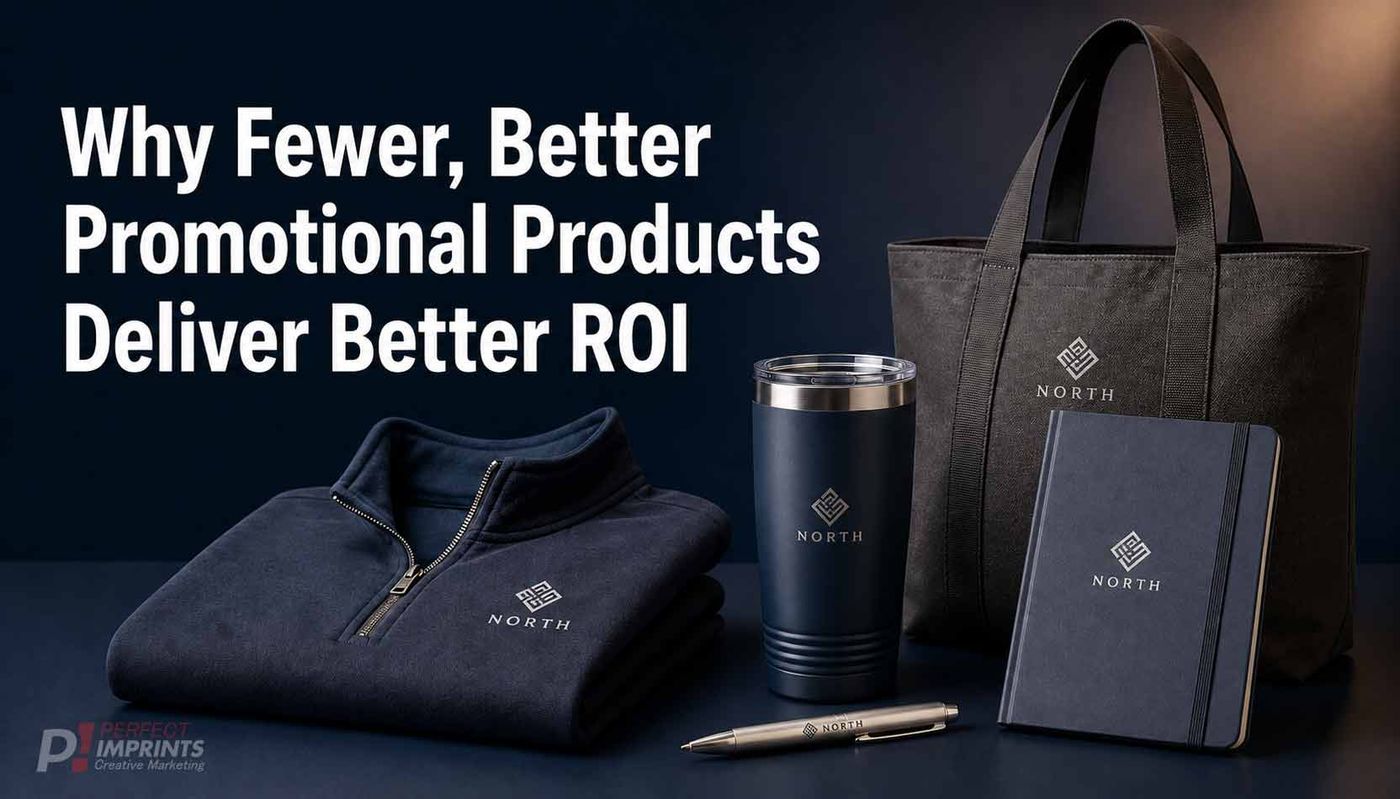
When businesses begin shopping for promotional products, one question often dominates the conversation: How many items can we get for our budget?
On the surface, that question makes sense, but it can lead buyers in the wrong direction. Ordering the greatest possible quantity does not necessarily produce the greatest marketing return. If recipients do not want, use, or keep the products, distributing more of them only creates more waste.
Recent consumer research suggests that people would rather receive fewer, higher-quality branded items. According to a 2026 study from Promotional Products Association International, 66% of consumers prefer fewer, high-quality promotional products, while only 20% prefer receiving more lower-cost items.¹
That finding supports a simple promotional marketing strategy: Give people something worth keeping.
Premium promotional products may cost more per item, but their usefulness, quality, durability, and perceived value can produce better long-term results. Instead of focusing exclusively on unit price, businesses should consider how often recipients will use the product, how long they will keep it, and what the product communicates about the brand.
What Are Premium Promotional Products?
Premium promotional products are branded items that offer greater usefulness, durability, design quality, or perceived value than typical low-cost giveaways.
A premium product does not necessarily have to be expensive. It simply needs to feel thoughtfully selected and well made. A comfortable shirt, smooth-writing pen, insulated tumbler, durable tote bag, or attractive notebook can feel premium without consuming an entire marketing budget.
Characteristics of effective premium promotional products include:
- Useful features that fit the recipient’s lifestyle
- Durable materials and reliable construction
- Attractive, modern design
- Comfortable or pleasant materials
- High-quality decoration
- Recognizable retail brands
- Thoughtful packaging or presentation
- Relevance to the audience or occasion
Here are Examples of Premium Promotional Items
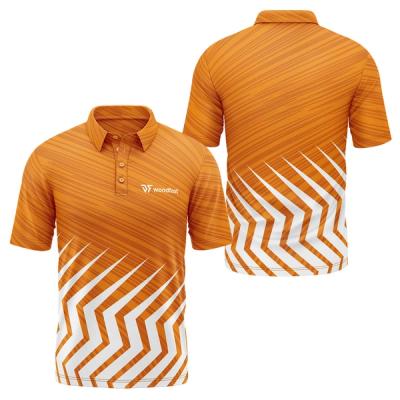 Perfect ImprintsNEW
Men's Dye Sublimated Birdseye Mesh Performance Corporate Polo shirts
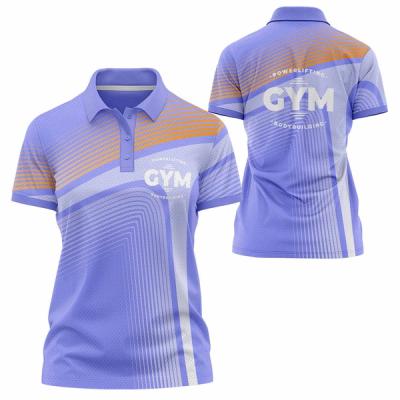 Perfect ImprintsNEW
Women's Dye Sublimated Birdseye Mesh Performance Corporate Polo shirts
 U BrandsNEW
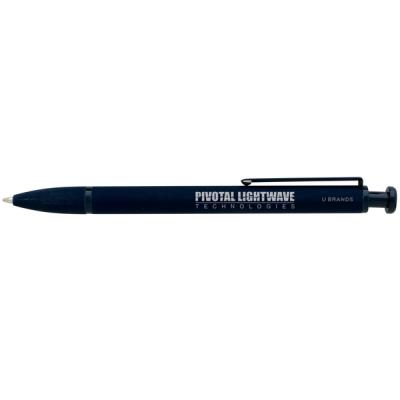
U Brands Monterey Midnight Pens - Laser Engraved
 U BrandsNEW
U Brands Monterey Earthly Pens - Laser Engraved
 STANLEY
40 oz Stanley The Quencher H2.0 Flowstate™ Tumbler
Item # 528189

The Decision Maker Portfolio
Item # 518275
 JBLNEW
JBL Go 4 Bluetooth Portable Speaker
Item # 529460
 Carhartt
Carhartt® Quilted-Flannel-Lined Duck Active Jacket
Item # 524210
The difference is often immediately noticeable. Recipients can feel the weight of a quality pen, the softness of a well-made shirt, or the insulation of a good tumbler. Those physical details influence what they think about the company whose logo appears on the product.
Consumers Prefer Fewer, Higher-Quality Products
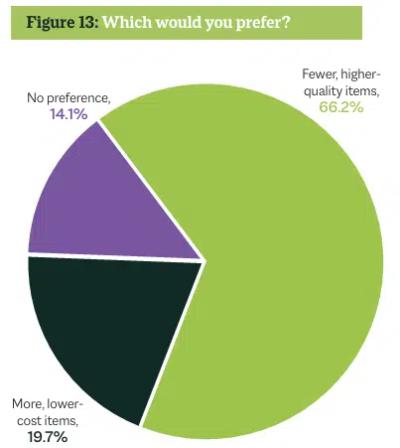
Image Source: PPAI
Promotional products are no longer evaluated only as free items. Consumers compare them with the products they already own and purchase.
PPAI’s research found that nearly 90% of consumers believe high-quality branded merchandise improves their perception of the company behind it.¹ A premium product can make an organization appear more professional, thoughtful, trustworthy, and established.
A poor-quality product can communicate the opposite.
If a pen stops writing, a tote bag tears, or a shirt becomes uncomfortable after one wash, the recipient may connect that disappointing experience with the advertiser. The product represents the company whenever it is used, including when it fails.
This does not mean every business needs to give away expensive electronics or luxury apparel. It means product quality should be appropriate for the audience, campaign, and desired brand image.
A company ordering 500 durable products may ultimately generate more meaningful exposure than one distributing 2,000 items that recipients quickly discard.
Usefulness Is the Foundation of Promotional Product ROI
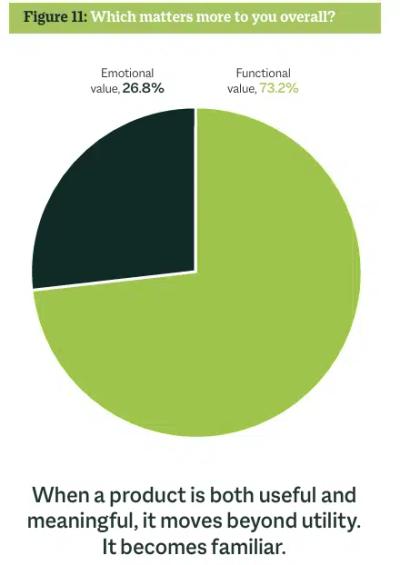
Image Source: PPAI
Premium quality alone is not enough. The product must also be useful.
PPAI surveyed more than 3,400 U.S. consumers and found that nearly 90% regularly or occasionally keep branded merchandise. Usefulness was the leading reason for retention, cited by 55% of respondents. Quality was the second-leading reason, cited by 21%.¹
The reasons people discard promotional products tell the same story:
- 38% discard them because they are not useful
- 27% discard them because they are poor quality
- Other recipients reject items because they already own too many similar products
Usefulness gives a promotional product access to the recipient’s daily routine. A branded tumbler travels to work. A quality jacket appears at sporting events. A tote bag goes to the grocery store. A power bank travels through airports and conferences.
Each use creates another opportunity for the recipient and the people around them to see the brand.
A product sitting in a drawer cannot generate the same return. This is why buyers should begin with the intended audience rather than a catalog price.
Ask what recipients actually need, where they spend their time, and which products they already use. The answers will lead to more relevant selections.
Higher Prices Can Produce a Lower Cost per Impression
The price of a promotional product is only one part of its actual marketing cost.
A $1 item discarded after one use may be more expensive per impression than a $15 item used hundreds or thousands of times. The correct comparison considers the product’s total useful life.
The Advertising Specialty Institute’s 2026 Ad Impressions Study illustrates this principle. ASI estimates that a $6 promotional tote can produce nearly 5,000 impressions during its lifetime, resulting in a cost of approximately one-tenth of a cent per impression. A $13 branded baseball cap averages approximately three-tenths of a cent per impression. Even fleece and outerwear can average less than four-tenths of a cent per impression because recipients wear them repeatedly.²
A simplified cost-per-impression formula is:
Product cost ÷ estimated lifetime impressions = cost per impression
Suppose one company orders inexpensive drawstring bags that recipients use once. Another company spends more on durable tote bags that recipients carry for several years. Although the second company pays more initially, the recurring exposure can make its campaign far more economical.
The cheapest product is not always the lowest-cost advertising option.
Premium Products Influence Brand Perception and Behavior
Branded merchandise can affect more than awareness.
PPAI’s 2026 consumer research found that promotional products led:
- 48% of respondents to look up the brand
- 42% to visit its website
- 39% to make a purchase
- 38% to discuss the brand with someone else
Only 13% reported taking no action.¹
ASI similarly found that 79% of U.S. consumers have a more favorable impression of an advertiser after receiving a promotional product. Three out of four said they were more likely to do business with the company.²
These findings make a strong case for treating promotional products as part of the customer experience.
A thoughtfully selected client gift can reinforce a business relationship. Quality apparel can help employees feel connected to their organization. An attractive trade show product can start a conversation and give the recipient a reason to remember the exhibitor.
The product is not separate from the brand. It becomes a physical representation of the brand’s standards.
Buyers Are Moving Toward Retail-Style Merchandise
The preference for better products is also changing what businesses order.
PPAI reported that 78.7% of promotional product distributors are seeing increased demand for better-designed, retail-style merchandise. Durability was identified as the strongest signal of value by 70.4%, followed by modern design at 65.2% and material quality at 58%.³
When budgets tighten, 60% of buyers reduce the quantity ordered first. Only 11% reduce customization.³
This does not mean businesses have stopped caring about price. It means many buyers are making more deliberate choices. They would rather give the right product to a carefully selected audience than distribute something forgettable to everyone.
Retail-style branded merchandise can include:
- Soft, well-fitting apparel
- Recognizable drinkware
- Tastefully decorated caps
- Functional travel accessories
- Durable bags
- High-quality writing instruments
- Modern technology products
- Curated employee or client gift sets
Decoration also affects perceived value. An oversized logo may make even an excellent product feel like an advertisement. Subtle embroidery, laser engraving, tonal decoration, full-color artwork, or a well-designed custom pattern can make merchandise more desirable.
How to Choose Fewer, Better Promotional Products
Businesses can improve promotional product ROI by applying a few simple standards before placing an order.
Define the desired outcome
Decide whether the goal is brand awareness, employee appreciation, lead generation, customer retention, event participation, or sales.
A mass-distribution campaign may need a different product than an executive gift program. The product should serve the campaign rather than simply fill a bag.
Understand the audience
Consider recipients’ occupations, interests, age ranges, work environments, travel habits, and common daily activities.
A premium notebook may work well for sales professionals. Performance apparel may be more appropriate for runners or outdoor workers. A quality tech accessory can be useful for remote employees and frequent travelers.
Evaluate usefulness
Ask whether recipients have a clear reason to use the item.
Products connected to daily routines generally offer more opportunities for repeat exposure. Drinkware, apparel, bags, writing instruments, desk products, safety items, and technology accessories can all perform well when matched with the right audience.
Check the construction and materials
Review the product specifications instead of relying only on photographs.
For apparel, consider fabric weight, fit, softness, and performance features. For drinkware, examine insulation, lid construction, capacity, and care instructions. For bags, evaluate stitching, handles, compartments, and material thickness.
Samples can help buyers compare products before committing to a larger order.
Think about decoration
The logo should be visible enough to support recognition without making the product undesirable.
The best decoration method depends on the product and campaign. Embroidery may create an upscale appearance on apparel and caps. Laser engraving can give drinkware or metal pens a permanent finish. Full-color printing works well for detailed graphics and bold campaigns.
Consider lifetime value
Estimate how many times the product might be used and how long it could remain in circulation.
A product used weekly for two years offers more marketing opportunities than a disposable item used for a few minutes.
Where Premium Promotional Products Work Best
Fewer, better products are especially effective when the recipient or occasion has significant value.
Good applications include:
- Customer appreciation gifts
- Employee recognition programs
- New-hire kits
- Sales incentives
- Executive gifts
- Trade show prospect qualification
- Company anniversaries
- Holiday gifts
- Corporate stores
- Uniform and apparel programs
- Influencer and media kits
- Membership rewards
For trade shows, for example, businesses do not necessarily need to give their best product to every attendee. A lower-cost item can support general booth traffic, while premium products are reserved for qualified prospects, scheduled meetings, or high-value clients.
This tiered approach protects the budget while placing the strongest merchandise with the people most likely to respond.
Stop Measuring Success by Quantity Alone
A large quantity can look impressive on an order confirmation, but quantity does not prove that a campaign will work.
The better questions are:
- Will recipients want the product?
- Will they use it regularly?
- Does it represent the quality of the brand?
- Will it remain useful long enough to generate repeat exposure?
- Can the company connect the product to a measurable action?
Premium promotional products can generate stronger brand impressions because people choose to keep them. That voluntary use is what separates branded merchandise from many other forms of advertising.
A digital advertisement disappears when the campaign ends. A quality shirt, bag, tumbler, or jacket can continue promoting a company for months or years.
Businesses do not always need more promotional products. They need better products, selected for the right people and connected to a clear marketing objective.
Contact Patrick at Perfect Imprints, and he’ll help you find premium promotional products that fit your audience, campaign, and budget.
References
- Promotional Products Association International. “The Things We Don’t Throw Away.” May 27, 2026.
- Advertising Specialty Institute. “ASI’s 2026 Ad Impressions Study: 5 Compelling Takeaways.” March 30, 2026.
- Promotional Products Association International. “PPAI Research: New Year, New-ish Trends.” January 7, 2026.
- Perfect Imprints. "What Makes Promotional Products Feel Premium, or Forgettable in 2026 and beyond? New Research Reveals." February, 9, 2026.
- Perfect Imprints. "72 Promotional Products Statistics Every Business Needs To Know (2025+ Data)." February 24, 2026.
Want Help Finding the Right Premium Promotional Products?
Our team can help you pick the right product, decoration, and quantity for your project. Reach out and we’ll send tailored ideas — usually within one business day.
See Related Blogs About Promotional Products Research
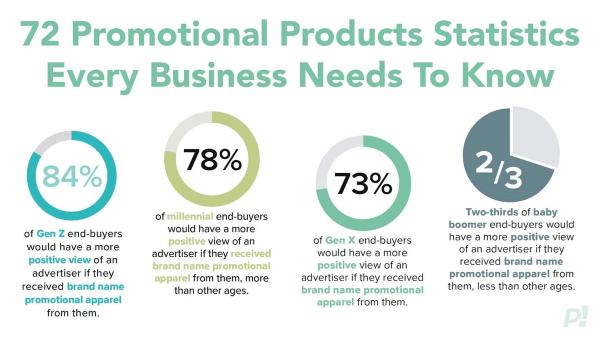
72 Promotional Products Statistics Every Business Needs To Know (2025+ Data)
If you want your marketing dollars to work harder, you need to understand what actually influences your audience. The latest research from 2025 and newer studies shows that promotional products are…
What Makes Promotional Products Feel Premium, or Forgettable in 2026 and beyond? New Research Reveals.
For years, promotional products were judged differently from retail items. That is no longer the case. According to new PPAI consumer research, today’s consumers evaluate promotional products using th…

How to Choose Promotional Items People Actually Keep and Use
In this video, we break down the top 5 promotional products people actually keep and use based on real consumer research. Learn how focusing on everyday items like apparel, bags, drinkware, and more c…